
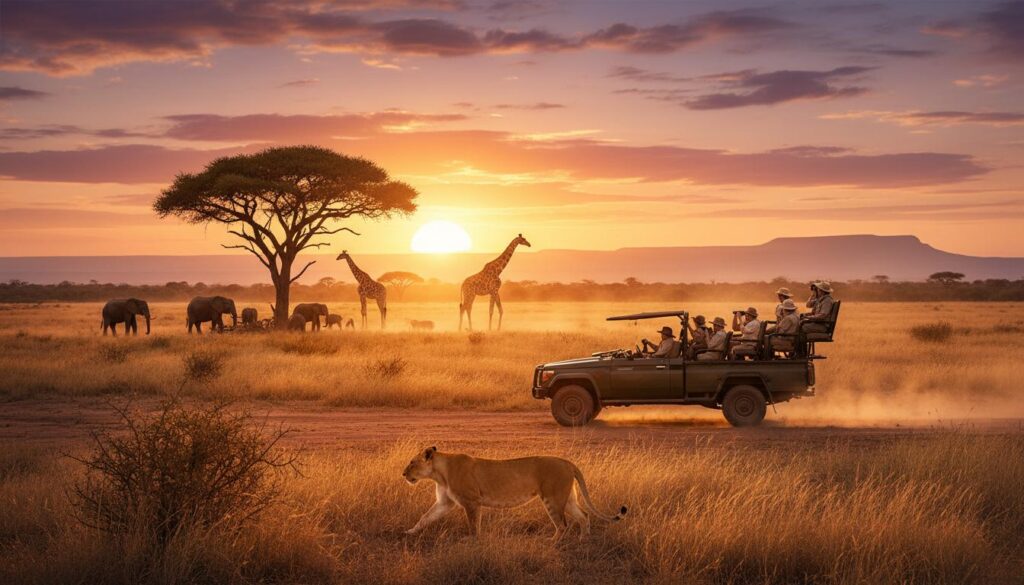
A safari is one of those trips that rewires your sense of time. Dawn drives, quiet midday hours, and evenings under big skies become your routine. If you’re in New Zealand and dreaming of lions, elephants, and wild places, this guide will show you what a safari is, how it works, the types to consider, the trade-offs, and how to choose the right option for your budget, timing, and comfort level.
What is
A safari is a guided wildlife journey in natural habitats, usually by 4×4 vehicle, on foot, or by boat, led by trained guides who help you find and understand animals and ecosystems. The word comes from Kiswahili for “journey.” Modern safaris focus on responsible wildlife viewing, conservation funding, and local community benefits.
Unlike a zoo visit, a safari places you in the animals’ world. You follow park rules, keep your distance, and let nature set the schedule. Most travellers from New Zealand visit Africa (Kenya, Tanzania, South Africa, Botswana, Namibia, Zambia, Zimbabwe), though tiger and leopard safaris in India and Sri Lanka are also popular.
How it works
Most safaris are organised through licensed operators or lodges. You can book a tailor-made trip, join a small group, or self-drive where allowed (for example, South Africa’s Kruger and Namibia’s Etosha).
A typical day looks like this:
- Pre-dawn wake-up and coffee
- Morning game drive (about 3–4 hours) when predators are active
- Brunch and downtime back at camp
- Afternoon game drive or walk, ending at sunset
- Dinner, stargazing, and early night
Your guide and tracker read signs—tracks, alarm calls, wind direction—to find wildlife. Vehicles are open-sided or have pop-up roofs for visibility. In water-based areas (Okavango Delta, Zambezi), you may use boats, mokoros (dugout canoes), or seasonal walking routes.
Costs typically bundle accommodation, meals, game drives, park fees, and guiding. Flights (international and light aircraft), visas, tips, and travel insurance are usually extra. Conservation levies support anti-poaching, habitat management, and community projects.
Types / examples
By experience
- Game-drive safari: Classic 4×4 drives with a guide. Best for first-timers.
- Walking safari: Guided foot patrols focused on tracks, birds, and ecology. Small groups and strict safety rules.
- Boat or mokoro safari: Calm, close-to-water viewing of elephants, hippos, and birdlife.
- Photographic safari: Vehicles modified for photographers, with beanbags, charging points, and more time on sightings.
- Balloon safari: Sunrise hot-air balloon over the Serengeti or Maasai Mara, followed by a bush breakfast.
- Horseback safari: For experienced riders; quiet approach and unique angles on plains game.
- Self-drive safari: You drive inside certain parks with clear rules and maps. Popular in South Africa and Namibia.
By destination
Not every safari is the same. These regions offer distinctive wildlife and styles:
- Kenya and Tanzania: Big cats, the Great Migration, classic savannah scenes.
- South Africa: Excellent infrastructure, varied parks, malaria-free reserves in some regions.
- Botswana: Water-and-land mix in the Okavango; low-impact, high-quality model.
- Namibia: Desert-adapted elephants and rhinos; wide-open landscapes; superb self-drive.
- Zambia and Zimbabwe: Walking safaris, remote camps, dramatic sightings around the Zambezi.
- India and Sri Lanka: Tiger, leopard, sloth bear, elephants; forest and jungle landscapes.
Quick comparison for first-time Kiwi travellers
| Destination | Signature wildlife | Best time (general) | Malaria-free options | Typical style | Relative cost |
|---|---|---|---|---|---|
| South Africa (Kruger, Greater Kruger, private reserves) | Big Five, strong leopard sightings | Dry season May–Sep; year-round possible | Yes, in some Eastern/Western Cape reserves | Game drives, optional self-drive | $$ |
| Kenya (Maasai Mara) & Tanzania (Serengeti) | Great Migration, big cats | Jun–Oct (dry); Dec–Mar (calving in south Serengeti) | No (generally) | Game drives, balloon optional | $$–$$$ |
| Botswana (Okavango, Chobe) | Elephants, water-based viewing | May–Oct (dry) | No (generally) | Water + land, remote camps | $$$–$$$$ |
| Namibia (Etosha) | Desert-adapted wildlife, black rhino | May–Oct (dry) | Some regions low risk; check advice | Self-drive friendly | $$ |
| Zambia (South Luangwa) & Zimbabwe (Hwange) | Walking safaris, wild feel | Jun–Oct (dry) | No (generally) | Guided walks + drives | $$$ |
| India (Ranthambore, Kanha) & Sri Lanka (Yala) | Tiger, leopard, elephants, birds | Nov–Apr (varies by park) | Varies by area | Jeep drives, permits per drive | $$ |
Pros and cons
Pros
- Wildlife encounters in natural habitats, guided by experts.
- Conservation funding and community employment when you pick ethical operators.
- Diverse styles to match comfort and budget, from tented camps to high-end lodges.
- Photography, birding, and learning opportunities far beyond typical holidays.
Cons
- Long travel from New Zealand (often 20–30 hours with stops).
- Seasonal demand can raise prices in peak months.
- Health planning needed in some regions (malaria prophylaxis, vaccines).
- Wildlife is wild—no guarantees on sightings.
How to use or choose
Step-by-step planning for Kiwis
- Choose your focus: Decide if you want the Great Migration, water safaris, walking, or self-drive. This sets your destination short-list.
- Match the season: Align travel dates with the best wildlife windows. For school holidays from New Zealand, July suits East and Southern Africa’s dry season; December–January suits southern Serengeti calving and South Africa’s summer.
- Set a budget: Factor flights from Auckland, Wellington, or Christchurch; internal flights; park fees; and tips. Expect higher costs for remote camps and small planes.
- Pick your style: Lodge-based comfort, classic tented camps, or a mobile camp that moves with wildlife. Self-drive is an option in selected parks.
- Decide on group vs private: Small-group trips cost less and are social. Private safaris offer flexibility—great for families and photographers.
- Plan health and safety: See a travel clinic in New Zealand for malaria advice and vaccinations. Carry prescriptions and a basic first aid kit. Check SafeTravel for entry rules and any yellow fever certificate requirements based on transit.
- Book with reputable partners: Look for licensed operators, local community involvement, and clear conservation policies. Read recent, independent reviews.
- Sort documents and money: Ensure your passport has at least six months’ validity. Check visa requirements early. Consider a multi-currency travel card and small USD cash for tips in some regions.
- Pack light and right: Soft bags fit small planes. Neutral clothing, sun protection, binos, and a universal adapter. Drones are often restricted—check rules before packing.
- Think ethics and impact: Avoid hands-on wildlife attractions, big-cat petting, and elephant riding. Choose lodges that minimise plastic, treat staff fairly, and support local projects.
Packing essentials for a safari
- Neutral, breathable clothing; warm layer for early mornings
- Sturdy shoes, hat, sunglasses, sunscreen, insect repellent
- Binoculars and camera with spare batteries/cards
- Reusable water bottle, small daypack, dry bag for boats
- Travel adaptor and power bank (plug types vary)
- Copies of documents and comprehensive travel insurance details
Flight routes from New Zealand
Most Kiwis connect via Australia, Southeast Asia, or the Middle East to reach hubs such as Johannesburg, Nairobi, or Doha before onward flights to regional airports. Door-to-door times commonly run 20–30 hours depending on connections.
If you want a taste closer to home
While not a traditional African safari, New Zealand offers “safari-style” experiences that scratch the wildlife and wild-places itch: kiwi-spotting walks on Rakiura (Stewart Island), 4WD high-country tours in Otago, bird sanctuaries in predator-free islands, and marine encounters in Kaikōura. They can be a warm-up before a bigger journey.
FAQ
Is a safari safe?
Yes, when you follow guide instructions and park rules. Stay in vehicles unless told otherwise, keep distance from animals, and secure food. Choose operators with strong safety records.
Do I need malaria tablets?
Some regions have malaria risk. A travel doctor in New Zealand can advise based on your exact itinerary and season. Use mosquito precautions regardless.
What’s the best time to go from New Zealand?
July–October suits much of East and Southern Africa for dry-season viewing. December–March works for southern Serengeti calving and summer in South Africa. Always check local seasonality for your park.
How long should my safari be?
Four to six nights in one or two areas is a strong first trip. Add city breaks, beaches, or Victoria Falls if time allows.
Can children go on safari?
Many lodges welcome families, with age limits for walks or certain drives. Private vehicles help with flexibility and breaks.
What camera gear is practical?
A zoom lens (e.g., 70–300mm), spare batteries, and a beanbag or stabiliser work well. Keep gear protected from dust. Ask your lodge about charging points.
Are drones allowed?
Generally no, or only with strict permits. Many parks ban drones to protect wildlife and visitor privacy. Confirm rules before travel.
What about food and water?
Reputable lodges provide safe meals and filtered water. In cities or road trips, stick to bottled or filtered water and reputable eateries.
Do I need cash?
Cards are widely used in cities and many lodges. Carry some small USD or local currency for tips and minor purchases in remote areas.
How do I choose an ethical safari?
Look for transparent conservation fees, fair employment, community projects, no hands-on wildlife activities, and small group sizes. Ask operators how your money supports parks and people.
Will I see the Big Five?
Often, but nothing is guaranteed. Good guiding, time in the field, and visiting the right habitats raise your odds.
Final tips for New Zealand travellers
Book early for peak months, especially if you want Migration camps or family rooms. Allow buffer days for long flights and jet lag. Double-check baggage limits on light aircraft if your itinerary includes bush airstrips. Most of all, keep your plans flexible—great sightings often happen when you linger an extra ten minutes at a waterhole.