
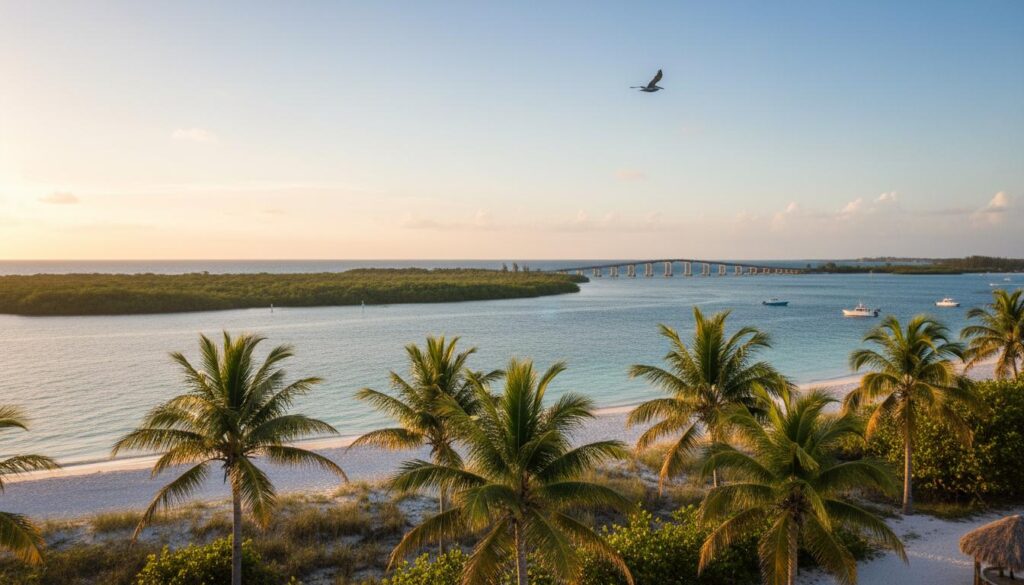
Florida is the US state that feels like a holiday even when you’re buying groceries. Beaches that run for days, world-famous theme parks, rocket launches, Cuban coffee at midnight—if you’re flying from New Zealand for a long-haul break, it packs variety into every kilometre. This guide explains what Florida is, how travel logistics work from Aotearoa, the best regions to choose, when to go, and how to plan a smooth, great-value trip.
What is
Florida is the southeastern peninsula of the United States, with more than 2,100 km of coastline and water never far away. It’s called the Sunshine State for good reason, though summer also brings tropical downpours. Most of Florida sits in the Eastern Time Zone, with a small slice of the far western Panhandle on Central Time. The state capital is Tallahassee; the largest metro is Miami.
Expect two broad climates: humid subtropical in the north and central belt (Jacksonville, Orlando, Tampa), and tropical in the south (Miami, the Everglades, the Florida Keys). Wildlife is front and centre—manatees in winter springs, alligators in freshwater, and endless birdlife across wetlands and barrier islands.
Florida’s economy runs on tourism, aerospace (think Kennedy Space Center and Cape Canaveral launches), agriculture (notably citrus), and trade. Culture here is a blend of Latin American, Caribbean, and Southern US influences. You’ll taste it in a Cuban sandwich in Miami, a Key lime pie in the Keys, and fresh Gulf Coast seafood near Naples.
How it works
When to go
- Best overall: November to April for warm, drier weather and fewer storms.
- Beach lovers: Late March to May and October to early December offer sunny days with manageable humidity.
- Theme parks: Weekdays outside US school holidays (avoid late June to mid-August and late December).
- Hurricane season: 1 June–30 November, with peak risk in August–September. Plan flexible itineraries and strong travel insurance.
Getting there from New Zealand
There are no nonstop flights from New Zealand to Florida. Typical routes go via Los Angeles, San Francisco, Dallas, Houston, Chicago, or Atlanta. Auckland–Los Angeles is about 12–13 hours; add 4–6 hours for the US domestic leg to Florida plus layovers. Door-to-door, many travellers log 20–30 hours.
Common Florida gateways: Miami (MIA), Orlando (MCO), Fort Lauderdale (FLL), Tampa (TPA), and sometimes Jacksonville (JAX). If your focus is theme parks, fly into Orlando. For beaches and nightlife, Miami or Fort Lauderdale make sense. For Gulf Coast resorts, Tampa is handy.
Entry and paperwork
- Visa waiver: NZ passport holders usually use the US Visa Waiver Program. Apply for ESTA online at least 72 hours before travel.
- Passport validity: Must cover your stay; some airlines prefer six months’ validity.
- Onward ticket: Required under visa waiver rules.
Money and costs
- Currency: US dollars (USD). Cards are widely accepted; contactless is common.
- Sales tax: Florida’s state rate is 6%, with local surcharges. Expect roughly 6–8.5% added at checkout.
- Tipping: 15–20% at restaurants; a dollar or two per drink at bars; 15–20% for rideshare; hotel housekeeping US$2–5 per night.
- Resort and parking fees: Many hotels add nightly charges; factor them in when comparing rates.
Getting around
- Driving: Right-hand traffic; speed limits posted in mph. NZ licences are generally accepted; an International Driving Permit is recommended. Toll roads are common—ask your car rental about a SunPass or toll-by-plate fees.
- Train: Brightline links Miami, Aventura, Fort Lauderdale, Boca Raton, West Palm Beach, and Orlando International Airport—fast, clean, and a good break from highways.
- Local transit: Miami’s Metrorail and Metromover help in the urban core. Orlando is car-centric; use rideshare for short hops.
- Parking: Beach and city parking fills early on weekends. Budget for garages or use park-and-ride options where available.
Connectivity and basics
- Power: 120V, Type A/B plugs. Bring a suitable adapter.
- Time difference: New Zealand is typically 16–18 hours ahead of Florida, depending on daylight savings shifts.
- Mobile: eSIMs and prepaid SIMs are easy to get; check roaming costs before you go.
- Safety: Heed beach flag warnings; rip currents are a bigger risk than sharks. Never approach or feed wildlife, especially alligators. During storm season, watch official advisories.
Types / examples
Florida isn’t one trip; it’s many. Here are the classic flavours most Kiwis look for, with what you can expect.
Theme-park marathon (Orlando)
- Headliners: Walt Disney World Resort, Universal Orlando, SeaWorld Orlando.
- Why go: Big-ticket rides, water parks, and polished family logistics.
- Tips: Book dining and skip-the-line options early. Multi-day tickets lower the per-day cost.
Beach and culture (Miami and Fort Lauderdale)
- Headliners: South Beach art deco, Wynwood street art, Little Havana cafes, Fort Lauderdale canals.
- Why go: Urban buzz plus Atlantic beaches, nightlife, and Cuban-influenced food.
Road to the Keys
- Headliners: Key Largo reefs, Islamorada sunsets, Seven Mile Bridge, Key West’s historic core.
- Why go: Island time, snorkeling, diving, and pastel houses under palm trees.
Nature and space (Everglades and Space Coast)
- Headliners: Everglades airboats and boardwalks, Kennedy Space Center, potential rocket launches.
- Why go: Mangroves, wading birds, and a real sense of Florida’s wild side.
Gulf Coast calm (Tampa Bay to Naples)
- Headliners: Clearwater and St. Pete beaches, Sarasota’s arts scene, Naples’ calm waters.
- Why go: Softer surf, family-friendly sands, glorious sunsets.
| Region | Vibe & Highlights | Best For | Best Months | Watch Outs |
|---|---|---|---|---|
| Orlando | Theme parks, water parks, outlet shopping | Families, thrill seekers | Nov–Apr | Summer heat, crowd spikes in US holidays |
| Miami/Fort Lauderdale | Beaches, nightlife, art deco, Cuban food | Couples, culture lovers | Dec–Apr | Peak pricing in winter; spring break crowds |
| Florida Keys | Island road trip, snorkeling, Key West charm | Relaxed getaways, divers | Nov–May | Hurricane season; limited beaches in parts |
| Everglades/Space Coast | Wildlife, boardwalks, Kennedy Space Center | Nature fans, families | Nov–Mar | Mosquitoes in summer; heat/humidity |
| Gulf Coast (Tampa–Naples) | Calm seas, white sand, sunsets | Beach holidays, multi-gen trips | Oct–Apr | Red tide can affect beaches at times |
| Panhandle | Dune-backed beaches, emerald water | Road trips, budget stays | Apr–Jun, Sep–Oct | Storm exposure; limited public transport |
Pros and cons
- Pros:
- Year-round warm weather and varied regions within one state.
- World-class attractions and beaches in easy reach of major airports.
- Brightline rail eases travel between Miami and Orlando.
- Plenty of family facilities, from strollers to water play areas.
- Cons:
- Summer heat, humidity, and afternoon storms.
- Hurricane season requires flexible bookings and insurance.
- Resort, parking, and toll fees add up quickly.
- Peak periods bring high prices and crowds.
How to use or choose
- Pick your season. If you want lower humidity and calmer weather, target November to April. For water-warmth and longer days, go spring or autumn.
- Choose your base by interest. Theme parks? Orlando. Nightlife and culture? Miami. Diving and sunsets? The Keys. Gentle family beaches? Gulf Coast.
- Map the flights. Compare Auckland routings via Los Angeles, San Francisco, Dallas, or Houston to your ideal Florida airport. Build generous layovers for US immigration.
- Lock in big-ticket days early. Reserve any required park entries, special tours, and space center add-ons. Policies change—check the latest on reservations and line-skipping options.
- Sort the car hire smartly. Add toll solutions, confirm included insurance, and photograph the vehicle at pickup and drop-off. If avoiding driving, plan Brightline segments and rideshare budgets.
- Protect the trip. Buy comprehensive travel insurance that covers storms and delays. Register for ESTA well ahead of time.
- Pack for the climate. Lightweight sun-protective clothing, a compact rain jacket for summer, reef-safe sunscreen, insect repellent, and a plug adapter.
- Plan beach and nature safety. Learn US beach flag meanings, watch rip current advisories, and give wildlife space—especially in freshwater.
- Budget realistically. Include taxes, resort fees, parking, tolls, and tipping. Multi-day park tickets and apartment-style stays can reduce daily costs.
- Leave room to breathe. Florida rewards slow mornings and sunset evenings. Don’t overpack the schedule; heat and distances can sap energy.
FAQ
What’s the best time for New Zealanders to visit florida?
November to April balances warm weather with lower storm risk. For swim-friendly seas and fewer crowds, late March to May and October to early December are excellent.
How long should I spend in florida?
Seven to ten days works for one region (e.g., Orlando or Miami + Keys). Two weeks lets you pair Orlando with the Gulf Coast or a Miami–Keys road trip.
Is driving in florida hard if I’m used to NZ roads?
Highways are wide and well-signed, but traffic around Miami and Orlando can be intense. Adjust to right-hand driving, watch for toll roads, and take breaks to beat jet lag.
Do I need a visa for florida if I hold an NZ passport?
Most NZ passport holders use the US Visa Waiver Program with an approved ESTA. Apply online at least 72 hours before departure.
What about hurricanes?
Season runs June–November, peaking August–September. Monitor official forecasts, keep plans flexible, and consider travel insurance that covers weather disruptions.
Are beaches safe for swimming?
Often yes, but always check beach flags and local advisories. Rip currents are the main hazard. On the Gulf Coast, occasional red tide events can affect water quality.
Can I see a rocket launch in florida?
Yes. Kennedy Space Center and Cape Canaveral host frequent launches. Check schedules in advance and allow time for traffic on launch days.
What are typical costs?
Mid-range hotels can be US$150–300 per night, higher in peak months. Theme park tickets are major expenses; multi-day passes reduce per-day cost. Add 6–8.5% sales tax and expect tipping.
Do I need cash?
Cards are widely accepted. Keep a small amount of cash for tips, small vendors, and toll-by-plate fees if needed.
Is public transport workable without a car?
In Miami to a degree (Metrorail, Metromover, Brightline). In Orlando and coastal areas, rideshare plus Brightline between Miami–Orlando can replace some drives, but many trips are easier with a car.
What food should I try in florida?
Key lime pie, Cuban sandwiches, stone crab (in season), fresh grouper, and Caribbean-influenced seafood. Coffee culture is strong in Miami—order a cortadito or cafecito.
Any sports or events worth planning around?
NBA’s Miami Heat, MLS’s Inter Miami CF, NFL and NHL teams, plus spring baseball. In Orlando, theme park festivals roll through much of the year. Book early around major holidays and school breaks.
Florida rewards good planning with easy days: a morning swim, an afternoon ride or boardwalk, and a sunset that makes you forget how far from home you are. Choose your corner, travel light, and let the state’s warmth do the rest.